Driving in Switzerland as an American
Switzerland drives on the right, the same as the United States. With an American license an International Driving Permit isn't always asked for, but it's worth carrying one. At junctions without signs or road markings, traffic from your right goes first, even from a small side street. You can't turn right on a red light, even after stopping.
Unless signposted otherwise, the limits are 50 km/h in towns, 80 on country roads and 120 on freeways, or about 31, 50 and 75 mph. Watch for fixed, mobile, average speed and red light cameras. The alcohol limit is 0.05, lower than the 0.08 at home.
Switzerland and the United States side by side
The rows in yellow are different from home.
| Rule | Switzerland | United States |
|---|---|---|
| Drive on the | Right | Right |
| Speed units | km/h | mph |
| Alcohol limit | 0.05 | 0.08 |
| Holding a phone | Banned | Banned |
| Turn on red | No | Yes, after stopping |
| Unmarked junctions | Traffic from the right | First to arrive |
| Roundabouts go | Counterclockwise | Counterclockwise |
| Daytime headlights | Always on | When visibility is poor |
| Passing on the inside | Only in slow traffic | Allowed |
The rules that catch Americans out
The most important first.
No turning right on red
You can't turn on a red light here, even after stopping. At home you can, so it's an easy habit to bring with you. Wait for green, or for a flashing arrow if one is shown.
Freeway vignette
Every freeway and expressway needs a CHF 40 vignette, either a sticker on the windshield or an e-vignette registered to your license plate. Driving without one costs a CHF 200 fine plus the vignette. Cars hired in France, including at the French side of Geneva airport, usually lack one.
Speeding is fined from 1 km/h
Every km/h over the limit is fined once the small tolerance is deducted. Fixed fines stop at 15 km/h over in town, 20 outside towns and 25 on freeways. Beyond that a prosecutor sets the fine, usually at least CHF 400, and from 21 km/h over in town, 26 outside towns or 31 on freeways you also lose the right to drive in Switzerland for at least a month.
The Raser offense
Driving 40 km/h over in a 30 zone, 50 over where the limit is 50, 60 over where it is 80 or 80 over on faster roads is a crime. It carries up to 4 years in prison, a driving ban of normally at least 2 years, and the car can be confiscated.
Radar detectors and camera warnings are banned
Carrying or using a radar detector is illegal, and customs can seize one at the border. Publicly warning of speed checks and using a phone or sat nav to warn of them are also offenses, so switch off camera alerts.
Priority to the right
At junctions with no signs or markings, traffic from the right goes first. This is the default on every road that is not signposted as a main road, including most residential streets and 30 zones. Think of it as a four-way stop with no signs, where the car on your right always goes first, even if you got there first.
Trams go first
Trams have priority over other traffic. Keep off the tracks, and at a tram stop without a passenger island stop until passengers have cleared the road.
Stop for pedestrians waiting at zebra crossings
At a zebra crossing without lights you must yield to anyone on it or waiting beside it who clearly wants to cross. Not stopping costs CHF 140.
Drink driving
The blood alcohol limit is 0.05, and 0.01 for learner drivers and holders of a Swiss probationary license, which lasts 3 years. That's lower than the 0.08 at home. The standard limit is 0.5 g/L in the blood or 0.25 mg per litre of breath.
You need a vignette
Freeways and expressways need a CHF 40 vignette, either a sticker on the windshield or an e-vignette registered to the license plate. A few tunnels and car trains charge separately. One vignette costs CHF 40 and there are no daily, weekly or monthly versions. The 2026 vignette is valid from 1 December 2025 to 31 January 2027.
11 more rules worth knowing
Carry an International Driving Permit
With an American license, carry an International Driving Permit (IDP) with your license. It isn't always asked for, but it's the safe choice. Your license is valid, but only for the categories it shows explicitly, understandably and in Latin script. If its classes are not clear to a Swiss officer, an IDP or an official translation into German, French, Italian or English settles it, so carry an IDP.
Lights on all day
Dipped headlights or daytime running lights must be on whenever you drive, and dipped headlights in every tunnel. Driving without lights by day costs CHF 40.
The 50 limit has its own sign
Passing the place-name sign does not by itself set 50 km/h. The urban limit starts at a round «50 generell» sign, which can be after the place-name sign.
Mountain roads and postbuses
On narrow mountain roads, the vehicle going downhill must stop and reverse to a passing place if needed. On roads signposted with a yellow post horn, follow the postbus driver's signals when passing is difficult.
No passing on the right on freeways
Pulling out to pass on the right and cutting back in costs CHF 250. Passing on the right is only allowed with care in queues, on lanes signposted for different destinations and on slip lanes.
Snow chains where signposted
When the «snow chains compulsory» sign is shown, you may only continue with chains on at least two drive wheels. Ignoring the sign costs CHF 100.
Speeds are in km/h
Speed signs and your speedometer's main scale are in kilometers per hour. 50 km/h is about 31 mph, 80 km/h is about 50 mph, 120 km/h is about 75 mph.
Speed limits
Towns are 50 km/h (about 31 mph) here, faster than the 25 mph at home.
Headlights on in daylight
Dipped headlights or daytime running lights must be on at all times, day and night. Dipped headlights or daytime running lights must be on whenever you drive.
What the car must carry
The car must carry a warning triangle, a child seat and snow chains (in some areas). Rental cars should have them, but check before you drive away, because the driver gets the fine.
Stick'AIR pollution-peak restrictions (circulation différenciée)
Only during declared pollution peaks: from 06:00 to 22:00, only vehicles with a Stick'AIR sticker of an authorised class may enter the central area. Swiss and foreign vehicles are both covered. Where: Central Geneva. A French Crit'Air sticker is recognized with the same class numbers. Stickers cost CHF 5 at garages and service stations in the canton. Check www.ge.ch/monStickAIR if a pollution peak is announced.
Open Switzerland in the app, set to an American licence, and keep all of this with you offline.
Open it in the appSpeed limits compared with home
Signs here are in km/h. The black marks show your limits at home, converted.
Who goes first
Priority to the right
When your road has priority
Signs that look different from home
General 50 km/h limit
Start of the built-up area's general 50 km/h limit.
Yield
You must yield to traffic on the road you are joining.
No parking
No parking. Brief stops to let people in or out or to load are allowed.
Signs you won't know from home
Start of a freeway. The general limit is 120 km/h and a vignette is required.
Proof that the CHF 40 freeway charge has been paid. Needed on every road that starts at the green Autobahn or Autostrasse sign.
Start of an expressway. The general limit is 100 km/h and a vignette is required.
End of the built-up area. The general limit outside towns, 80 km/h, now applies.
Start of a zone with a 30 km/h limit, usually in residential streets.
Junction ahead where traffic from the right has priority.
You are on a main road. Traffic joining from side roads must yield to you.
Your road is no longer a main road. Priority to the right applies again unless signposted.
Roundabout. Traffic goes counterclockwise.
Speed cameras
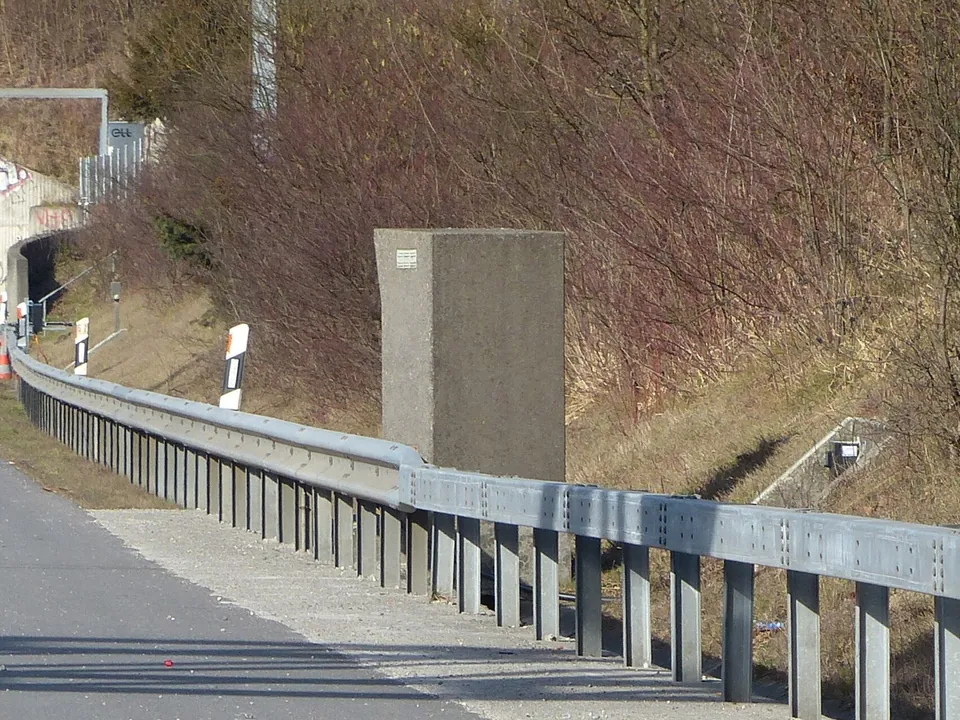
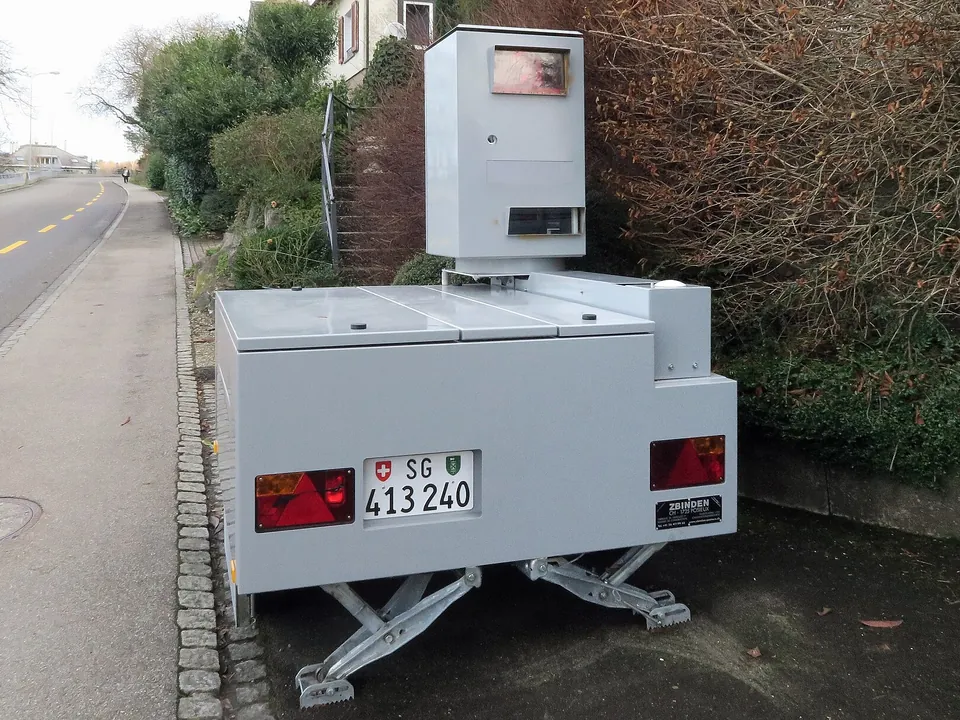
Switzerland uses fixed, semi-stationary, mobile, section control and red light cameras. There is no official camera warning sign, cameras usually give no advance warning, and mobile units can be hidden. Some cantons publish camera sites online. A camera fine goes to the registered keeper of the car, which for a Swiss rental car is the rental company. The keeper can name the driver, who then receives the fine. If you do not live in Switzerland and are fined at the roadside, you must pay on the spot or leave a deposit.
Before you drive
- Your driving licenseThe physical card, not a photo or a digital license.
- An International Driving PermitRecommended with your license. Get it before you leave home.
- Your passportRental companies and police ask for ID.
- Warning triangleMust be easy to reach in the car. Set it up at least 50 m behind a stopped car, or 100 m on fast roads. Not setting it up costs CHF 60. Swiss law does not require a hi-vis vest or a first aid kit in cars.
- Child seatChildren under 12 need an approved child seat (UN R44 or R129) unless they are at least 150 cm tall.
- Stick'AIR pollution-peak restrictions (circulation différenciée)A French Crit'Air sticker is recognized with the same class numbers. Stickers cost CHF 5 at garages and service stations in the canton. Check www.ge.ch/monStickAIR if a pollution peak is announced.
- A vignette for the freewaysFreeways and expressways need a CHF 40 vignette, either a sticker on the windshield or an e-vignette registered to the license plate. A few tunnels and car trains charge separately.
Driving in Switzerland soon?
Get the before-you-drive checklist for Switzerland by email, with what to carry, what to check on the hire car, and the rules people get fined for.
The checklist now, one more email a few days later, and a reminder before you drive if you add the date. Unsubscribe any time.
Where Americans drive next
Switzerland for drivers from elsewhere
Sources: the official Switzerland sources listed on the Switzerland guide, checked 15 October 2026.