Driving in the United States as a Portuguese driver
The United States drives on the right, the same as Portugal. Many junctions have a stop sign on every approach, and cars go in the order they stopped. You can turn right on a red light after stopping, unless a sign says not to.
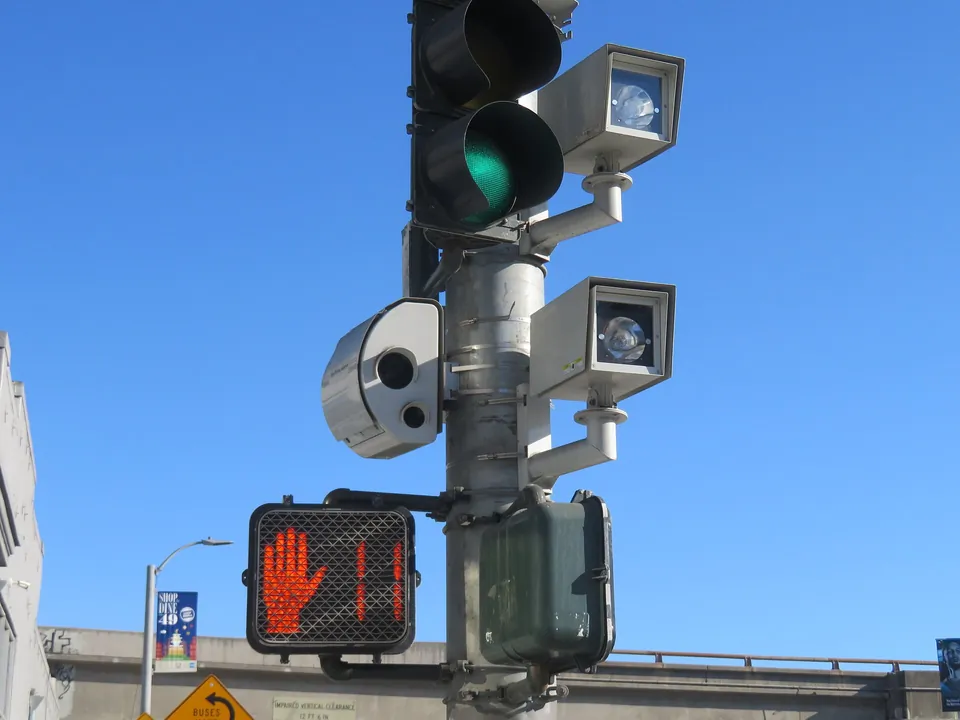
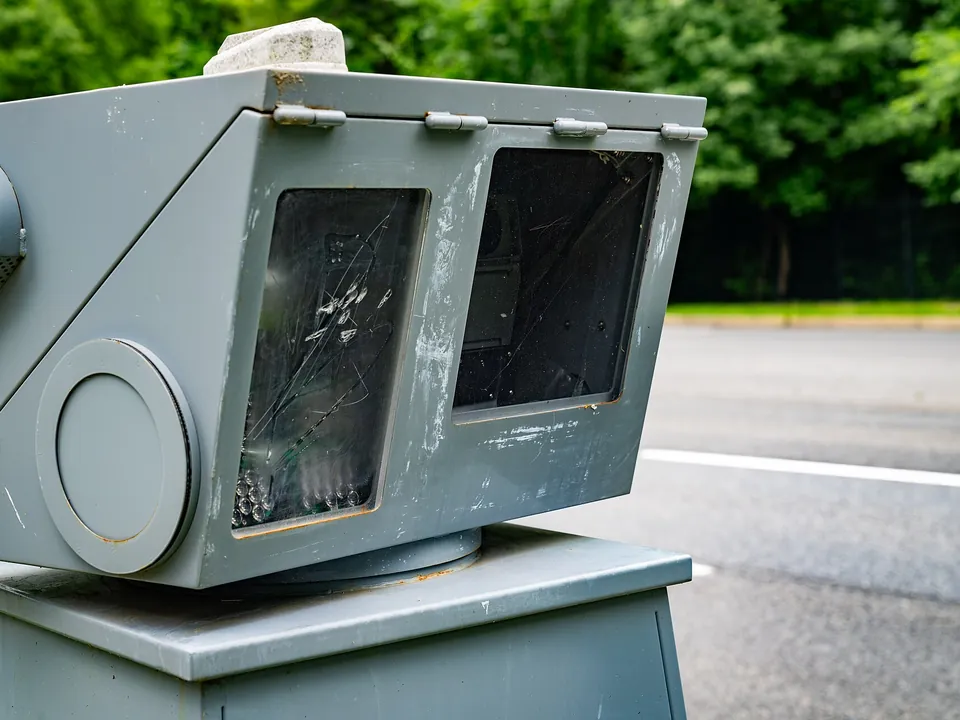
Unless signposted otherwise, the limits are usually 25 mph in towns, 55 on country roads and 70 on motorways, or about 40, 89 and 113 km/h. Watch for fixed, mobile and red light cameras.
The United States and Portugal side by side
The rows in yellow are different from home.
| Rule | United States | Portugal |
|---|---|---|
| Drive on the | Right | Right |
| Speed units | mph | km/h |
| Alcohol limit | 0.08 | 0.05 |
| Holding a phone | Banned | Banned |
| Turn on red | Yes, after stopping | No |
| Unmarked junctions | First to arrive | Traffic from the right |
| Roundabouts go | Anticlockwise | Anticlockwise |
| Daytime headlights | When visibility is poor | When visibility is poor |
The rules that catch Portuguese drivers out
The most important first.
Stop for school buses in both directions
When a yellow school bus stops with its red lights flashing, traffic from both directions must stop and wait until the lights stop flashing. In New York you must stop even on the other side of a divided highway. In California you need not stop if the bus is on the other side of a divided highway or a road with two or more lanes each way. Flashing yellow lights mean the bus is about to stop.
All-way stops
At a junction where every road has a STOP sign with an ALL WAY plaque, everyone stops. Drivers then go in the order they arrived. If two arrive together, the driver on the right goes first. You won't have met these at home, and they're common.
Right turn on red
In most places you may turn right at a red light after stopping completely, unless a NO TURN ON RED sign is posted. Give way to pedestrians and traffic first. It is banned in New York City unless a sign allows it, and never allowed on a red arrow in California or New York.
Pull over for sirens
When an emergency vehicle approaches with a siren and flashing lights, pull over to the right edge of the road and stop until it passes. In New York this applies even when it comes towards you on a two-way road. If you are in a junction, drive through it first.
Move over for stopped vehicles
When police, emergency vehicles, tow trucks or road crews are stopped with flashing lights, move out of the lane next to them. If you can't move over, slow down. In Florida that means 20 mph below the limit.
12 more rules worth knowing
Left turns on a green light
A green light without a green arrow lets you turn left, but you must give way to oncoming traffic and pedestrians. A flashing yellow arrow means the same. Only a green arrow gives you a protected turn.
Overtaking on both sides
On roads with two or more lanes in each direction, passing on the right is legal. Check both mirrors before changing lanes, because cars may pass on either side.
Unmarked crosswalks
Pedestrians have priority in crosswalks, including ones with no painted lines. Never pass a car that has stopped at a crosswalk.
Carpool lanes
Lanes marked with a white diamond are for vehicles carrying at least the number of people shown on the signs, such as 2+ or 3+, often only at certain hours. Double solid white lines beside them must not be crossed.
Police traffic stops
If police signal you to stop, signal right and pull onto the right shoulder. Stay in the car, turn off the radio, lower the window and keep your hands where the officer can see them. You must show your licence, proof of insurance and registration.
Speeds are in mph
Speed signs and your speedometer's main scale are in miles per hour. 25 mph is about 40 km/h, 55 mph is about 89 km/h, 70 mph is about 113 km/h.
Passing on the right is legal
On multi-lane roads, cars can pass on either side, so check both mirrors before you change lanes.
What the car must carry
The car must carry a child car seat. Hire cars should have them, but check before you drive away, because the driver gets the fine.
Congestion Relief Zone
A car entering the zone pays once a day. With E-ZPass it is US$9 at peak times (5 am to 9 pm on weekdays, 9 am to 9 pm at weekends) and US$2.25 overnight. Without E-ZPass, the Tolls by Mail rate is US$13.50 peak and US$3.30 overnight. Rates are due to rise in 2028 and 2031. Where: Manhattan, New York City: local streets and avenues at or below 60th Street. FDR Drive, the West Side Highway (Route 9A) and the Hugh L. Carey Tunnel connections to West Street are not included. There are no booths. Most entry points only read number plates, and the bill goes to the registered owner. Hertz, Dollar and Thrifty charge hire cars once per 24-hour period and bill it separately from their toll plan.
Toll roads
Many toll roads, bridges and express lanes are cashless. Tolls are read from a windscreen tag or a photo of the number plate, and for a hire car the bill goes to the hire company, which charges you with fees. The main toll tags are E-ZPass in the north-east and midwest, SunPass and E-PASS in Florida, and FasTrak in California. E-ZPass is accepted in Delaware, Illinois, Indiana, Kentucky, Maine, Maryland, Massachusetts, Minnesota, New Hampshire, New Jersey, New York, Ohio, Pennsylvania, Rhode Island, Virginia and West Virginia, among others. Purple marks lanes and signs for cars with a registered toll account only. A purple sign showing the tag's logo and the word ONLY, sometimes with a white NO CASH plaque, means every vehicle on that road needs a registered toll account.
Centre left-turn lanes
A lane in the middle of the road, marked with a solid line and a broken line on each side, is shared by both directions for turning left. Use it only to turn, and drive no more than 200 feet (60 m) in it in California.
Drink driving
The blood alcohol limit is 0.08, and 0.02 for drivers under 21. Every state bans drivers under 21 from driving with any detectable alcohol. Most states set this at 0.02, and some lower. California sets 0.01. That's higher than the 0.05 at home, but the safe choice is the same: if you drink, don't drive. It is illegal in every state to drive with a blood alcohol concentration of 0.08 or more, except in Utah, where the limit is 0.05.
Open the United States in the app, set to a Portuguese licence, and keep all of this with you offline.
Open it in the appSpeed limits compared with home
Signs here are in mph. The black marks show your limits at home, converted.
Who goes first
First to stop goes first
Roundabouts go anticlockwise
Signs that look different from home
Give way
Give way to traffic and pedestrians.
Speed limit
Maximum speed in miles per hour.
No entry
No entry for vehicles from this direction.
School speed limit
A lower speed limit in a school zone, during the times shown.
Camera enforcement
The limit or rule above is enforced by camera.
No overtaking
Overtaking is banned from here.
Bend ahead
A bend or turn ahead.
Road works ahead
Road works ahead.
Railway crossing ahead
A railway crossing ahead.
Give way to pedestrians
State law requires you to give way to, or stop for, pedestrians in the crosswalk.
Signs you won't know from home
Every road at this junction has a STOP sign.
Traffic on this street moves only in the direction of the arrow.
You may not turn while the light is red.
School area or school crossing.
A camera at the traffic lights ahead photographs cars that run the red light.
Recommended safe speed for the hazard, such as a bend or exit ramp.
Deer often cross here.
A lane ends ahead.
Speed cameras
Red light cameras and speed cameras are legal in some states and banned in others. Speed cameras are mostly found in school zones and work zones. A PHOTO ENFORCED sign is common but not always present, and the ticket goes to the car's registered owner. Camera tickets go to the car's registered owner, which for a hire car is the hire company. In some states the owner can name the driver. In New York, camera tickets are treated like parking tickets and the owner is liable whoever was driving.
Before you drive
- Your driving licenceThe physical card, not a photo or a digital licence.
- Your passportHire companies and police ask for ID.
- Child car seatYoung children must ride in a child seat, and the rules vary by state. In California, children under 8 or under 4 feet 9 inches (145 cm) need a child seat in the back. In New York, children under 4 need a child safety seat and children aged 4 to 7 a booster seat. In Florida, children aged 5 or younger need a crash-tested, federally approved car seat.
Driving in the United States soon?
Get the before-you-drive checklist for the United States by email, with what to carry, what to check on the hire car, and the rules people get fined for.
The checklist now, one more email a few days later, and a reminder before you drive if you add the date. Unsubscribe any time.
Where Portuguese drivers drive next
The United States for drivers from elsewhere
Sources: the official United States sources listed on the the United States guide, checked 15 October 2026.