Speed cameras in Japan: what they look like

Checked 15 October 2026

Fixed speed cameras, called Orbis, usually have warning signs 1 to 3 km before them. Portable cameras on residential roads and school routes, and police speed traps, usually do not.

Warned by a sign

Fixed speed camera (オービス (Orbis), loop coil type), Fixed speed camera (オービス (Orbis), radar type), Fixed speed camera (Hシステム and LHシステム (H and LH systems))

Not always warned

Other camera, Mobile camera, Unmarked camera car

Every camera type

Real photos, with where each one was taken and who took it.

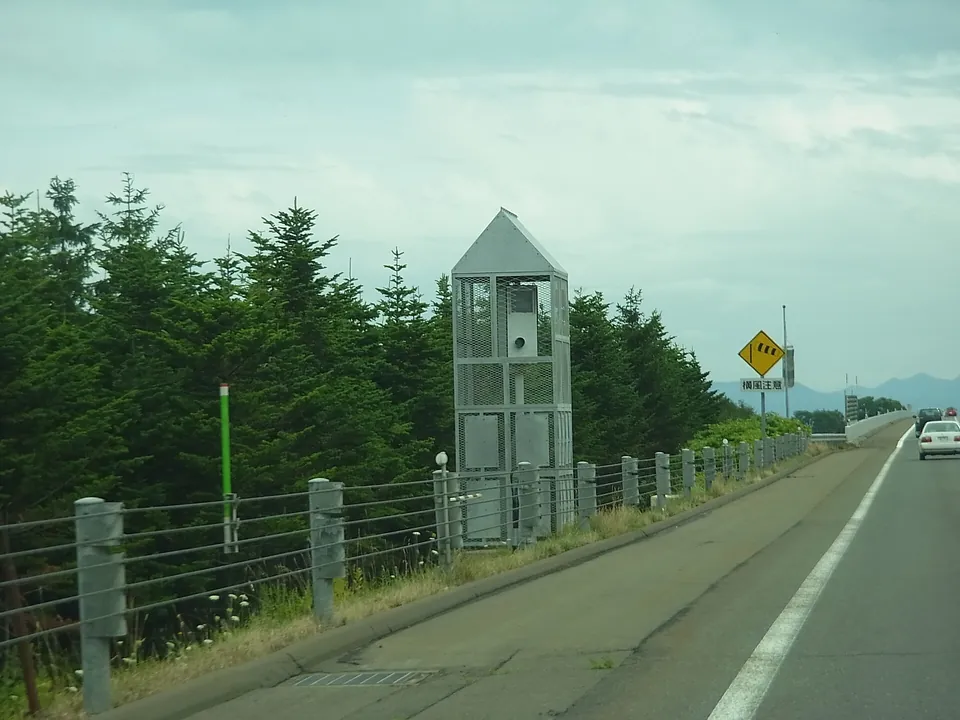
A tall Orbis speed camera housing behind wire mesh beside a highway
HokkaidoPhoto: Ab11, CC BY 3.0

Fixed speed camera

Signposted

オービス (Orbis), loop coil type

Looks like: A camera unit beside or above the road, usually behind wire mesh. Three sensor loops are buried in the road, and the spot is marked with white lines or notched grooves in the road surface.

Catches: Speeding.

It does not transmit, so ordinary radar detectors cannot sense it.
Fixed speed camera

Signposted

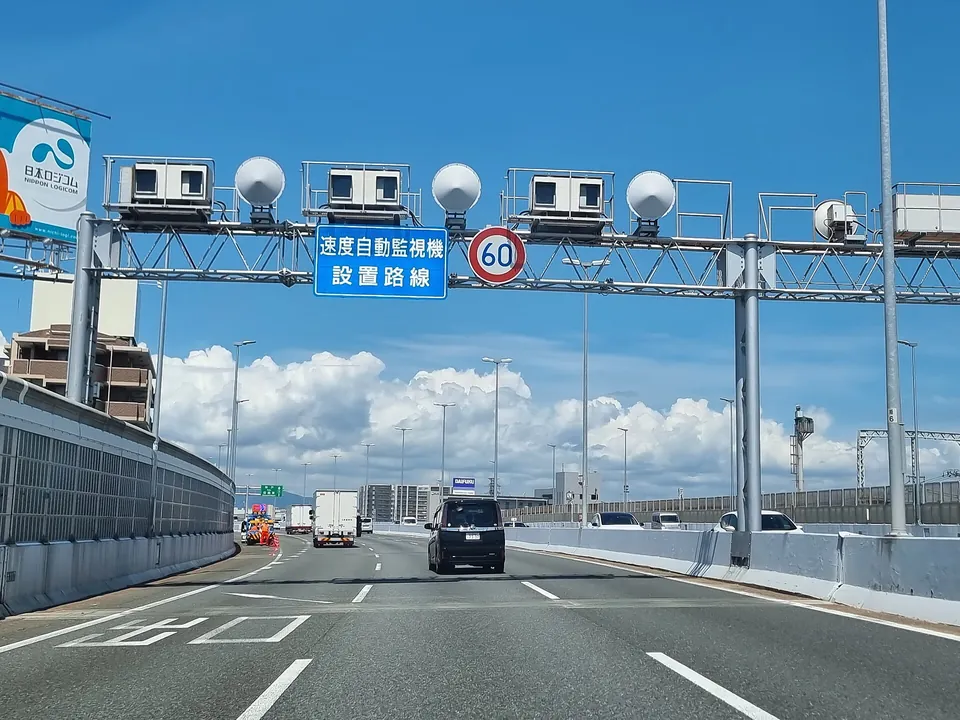
オービス (Orbis), radar type

Looks like: A camera on the central reserve or the roadside, with a radar antenna about 10 metres ahead of it over the road.

Catches: Speeding.

Used where loops are hard to install, such as busy roads.

Speed cameras and flash units on a gantry over an expressway, with a sign saying speed is monitored automatically
Hanshin Expressway, between Osaka and KobePhoto: Benlisquare, CC BY-SA 4.0

Fixed speed camera

Signposted

Hシステム and LHシステム (H and LH systems)

Looks like: A camera housing on a gantry over the road. Some H systems are paired with an electronic board that lights up 速度落とせ (slow down). LH systems use loops in the road marked with white lines, and some are inside tunnels.

Catches: Speeding.

The most common fixed type.

Other camera

No warning

可搬式オービス (portable Orbis)

Looks like: A small camera and speed sensor, sometimes on a tripod, set up at the roadside. Officers can carry it, so it can be used on narrow streets.

Catches: Speeding on school routes and residential roads, and also on main roads.

In use since April 2016. Every prefectural police force has them. Instead of posting signs, some police forces, such as Aichi and Oita, announce where they will use them in advance on social media.

Mobile camera

No warning

移動式オービス (mobile Orbis)

Looks like: A police van, often a station wagon, parked at the roadside with the camera inside. Some are fitted in patrol cars.

Catches: Speeding.

Run by at least two officers.

Unmarked camera car

No warning

覆面パトカー (unmarked police car)

Looks like: An ordinary-looking car with hidden police equipment.

Catches: Speeding and other offences. Officers chase and stop the driver.

The warning signs

速度自動取締装置設置路線(SOKUDO JIDŌTORISHIMARI…

Speed cameras on this route

速度自動取締装置設置路線 (sokudo jidō torishimari sōchi secchi rosen)

A fixed speed camera is ahead, usually 1 to 3 km away.

What to do: Check your speed.

  • A sign, usually blue with white text, with wording such as 速度自動取締装置設置路線 (automatic speed enforcement on this route). The wording and design vary by prefecture. In Okinawa it adds SPEED CHECK in English. Usually at least two signs, about 1 to 3 km before a fixed camera.

Good to know

Radar detectors: Legal

If you're in a hire car: The camera flashes when it takes a photo. A notice goes to the registered owner, usually within days. For a hire car, the hire company has to identify the driver, which can add weeks or months.

Fines

OffenceFine
Passing a cyclist without enough space or at an unsafe speed (since 1 April 2026) Fixed penalty for an ordinary car, plus 2 points.¥7,000
Drunk driving (impaired) 35 points and revocation.Up to ¥1,000,000, or up to 5 years in prison

The full guide to driving in Japan · Speed cameras in other countries